


Cooling laser-cutting equipment without leaking, cross-contamination, or excessive downtime
The customer: Glen Dimplex Thermal Solutions, a precision cooling business developing a highly accurate, closed-loop cooling solution for an OEM laser-cutting integrator.
The challenge: Corroded evaporators with pin-hole leaks between the refrigerant and water channels resulted in damaged chillers, damaged laser equipment, and extensive downtime.
The solution: Replace leaking copper-brazed heat exchangers from a previous supplier with SWEP All-StainlessTM technology.
The heat exchangers: A SWEP All-Stainless Q80ASx60 brazed plate heat exchanger, fitted with SWEP’s unique Q-pipe technology, to deliver hot gas into the distribution port, without affecting the suction liquid distribution.
The results: Several hundred SWEP All-Stainless BPHEs are now installed in chillers designed for this OEM. They operate very close to design parameters, without leaking, cross-contamination, or excessive downtime.
Cooling sheet metal laser cutting equipment
Precise temperature control is critical to maintaining the integrity and accuracy of a laser cutting-beam. This level of control is only possible with a specialized cooling system that ensures the laser can hold extremely tight tolerances while cutting. During the process, the laser’s resonator, optics and electronics generate a substantial amount of waste heat, which must be rejected in a controlled manner. Deionized water, which prevents critical electrical and electronic components from short-circuiting in the unlikely event of an internal leak, is the primary coolant. To facilitate heat rejection, deionized water flows through the cooling plates of the laser to the chiller. The chiller is cooled by brazed plate heat exchangers connected to the refrigeration circuit. Because deionized water is extremely aggressive to copper, however, it unsuitable for use with traditional copper-brazed heat exchangers.

Screenshot from 3-D CAD model of the Laser Chiller showing a Q80ASx60 SWEP brazed plate heat exchanger.
To solve the many challenges of cooling this equipment, Glen Dimplex Thermal Solutions (GDTS) formed a close partnership with an OEM laser-cutting integrator, ultimately developing a closed-loop cooling solution for their equipment. This customized solution utilizes refrigeration and hydronics as the primary means of heat rejection from the process. In the early stages of their collaboration, the partners faced significant challenges due to corrosion and leaking in the copper-brazed heat exchangers (provided by a previous supplier) that were used as evaporators. Fortunately, SWEP was able to solve the problems in the system by supplying new heat exchangers from the SWEP All-StainlessTM range, which are impervious to deionized water.
The role of SWEP brazed plate heat exchangers
The chiller is integral to the suite of equipment utilized in the laser cutting operation; its reliability is key to preventing costly downtime and ensuring the quality of the cuts. To improve the marketability of the OEM’s turnkey solution, the chiller is also subject to stringent footprint limitations. The compactness and high surface area-to-volume ratios of brazed plate heat exchangers made them ideal for this application. Compared to other types of stainless-steel heat exchangers, SWEP BPHEs offer the same robustness, with a lower total cost of ownership—a key factor in cost-sensitive OEM applications. A significant number of chillers produced at GDTS’s Kalamazoo, MI facility already utilized BPHEs from a different manufacturer. However, a lack of both options and support for the design engineers led to oversizing the BPHEs, which added significant cost to many OEM applications. In contrast, SWEP offered a wide range of brazing materials and executions, as well as in-depth selection guidance (using SWEP selection software) and technical support.
The chiller was able to achieve precise temperature control by implementing hot gas bypass, where hot refrigerant discharged by the compressor is fed in a controlled manner directly into the evaporator – in this case, a SWEP All-Stainless BPHE. This allows any excess cooling in the evaporator to be precisely trimmed, ensuring a tight tolerance on the coolant temperature. Conventionally, hot gas merges with cold refrigerant downstream of the throttling device (such as thermostatic expansion valve) before entering the evaporator. This requires additional plumbing and a length adequate for the two streams to mix homogenously. In contrast, SWEP’s unique Q-pipe technology enables the introduction of the hot gas into the distribution port, without affecting the distribution of the suction liquid. SWEP worked closely with GDTS to implement a method of integrating this hot gas stream directly into the brazed plate heat exchanger, further reducing plumbing components and length, while providing equivalent functionality.
.jpg)
Actual installation of a SWEP Q80ASx60 brazed plate heat exchanger (insulated)
Why choose SWEP?
Several hundred SWEP BPHEs are currently installed in chillers designed for this OEM laser-cutting integrator, which are in use at a wide range of machine shops and fabricators, throughout the U.S. All BPHEs in the field operate very closely to designed parameters, without leaking, cross-contamination, or excessive downtime. ‘’We truly appreciate the time and dedication from the SWEP team over the years, especially in this project. By supplying their specialized range of All-Stainless brazed plate heat exchangers, they helped us tackle an ongoing problem by providing a sustainable solution moving forward,’ says Sean Weera, Lead Engineer – R&D at Glen Dimplex. SWEP and Glen Dimplex look forward to continuing their collaboration for years to come in multiple applications where brazed plate heat exchangers can provide highly efficient solutions.
More about Glen Dimplex
The Glen Dimplex Group is an international company with 50 years of experience in manufacturing and solutions. They are present in more than 20 countries, working in four key sectors: Heating and Ventilation, Precision Cooling, Flame, and Consumer Appliances. Their precision cooling business is focused on crafting customized solutions for high-precision machine and process cooling, which they currently deliver to more than 10,000 customers in 30 markets globally.
More related stories
Related case stories
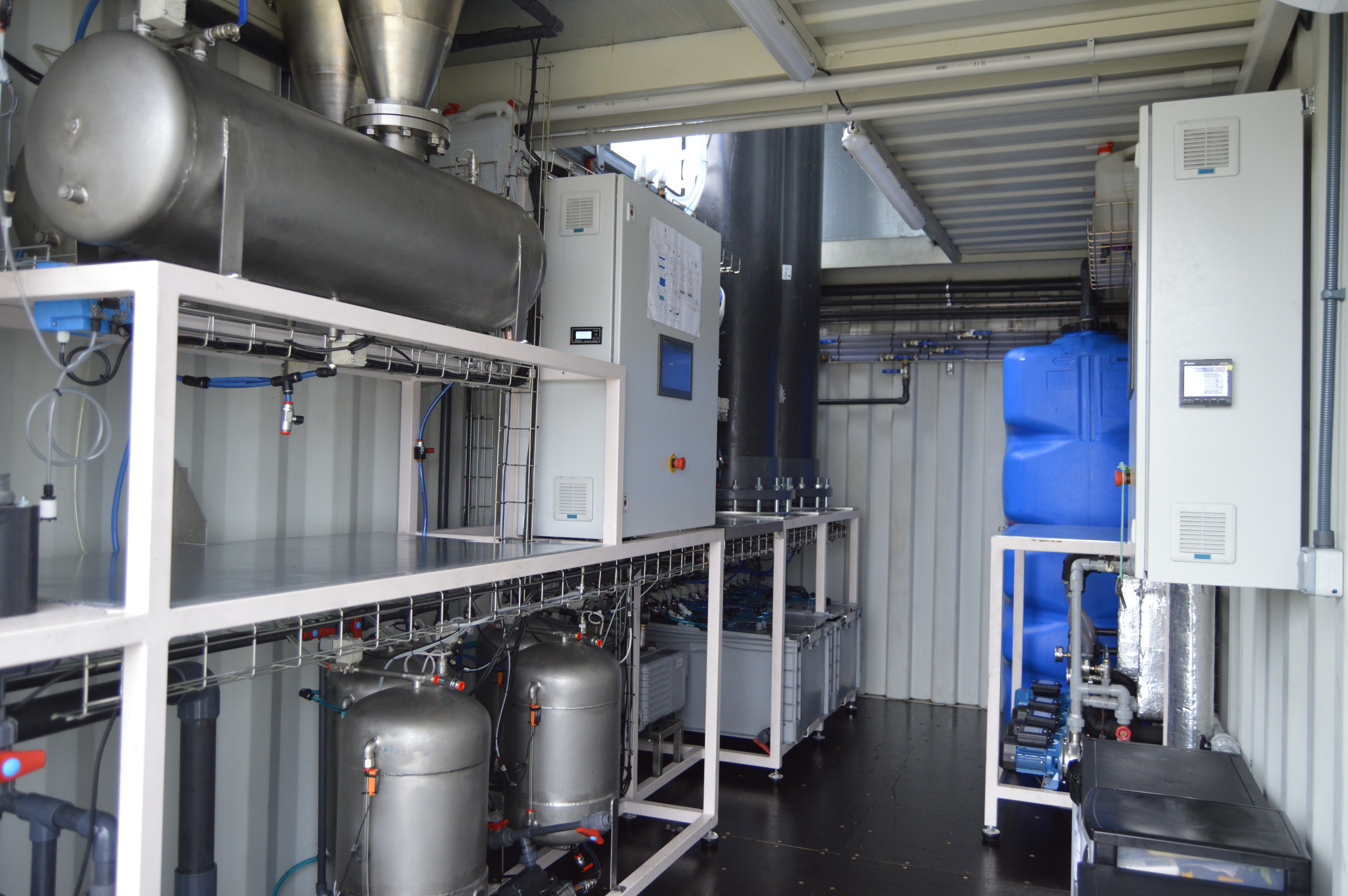
In recent decades, over-exploitation, pollution and climate change have led to severe water stress across the world. Desalination could help resolve this, but large-scale desalination technologies are energy intensive. Fresh Water Nature (FWN) is a clean-tech company specializing in green water treatment with a low-impact, low-carbon desalination technology called Cool Steam.

Green Resource Engineering (GRE) wanted to create two new process cooling systems that can operate at higher temperatures and a smaller version that could also operate in reverse as a heat pump.
Address
SWEP International AB
PO Box 105
261 44 Landskrona
Sweden
Follow Us

Copyright © 2026 SWEP International AB, a Dover company
Follow Us

Copyright © 2026 SWEP International AB,a Dover company