

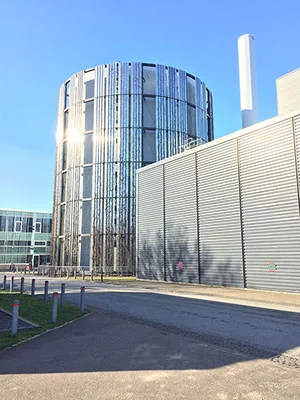
Using waste to keep Copenhagen warm
The customer: Vestforbrænding, Denmark’s largest waste and energy company.
The challenge: Develop a new, environmentally friendly heating solution that generates energy from waste and reduces CO2 emissions.
The solution: Replace large natural gas boilers with a district heating system that increases output by approximately 350,000 MWh/year.
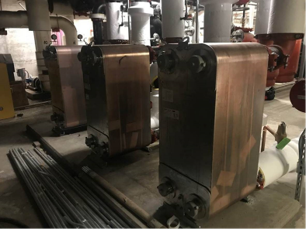
The heat exchangers: Eight (8) SWEP B649 brazed plate heat exchanger units, each with the maximum number of plates.
The results: More heat and energy, less waste and CO2 – and a highly profitable project.
30 years ago, the heating market was divided between natural gas and district heating networks. Today’s market is dramatically different. Both consumers and producers are focused on reducing CO2 emissions and turning waste into energy. With these goals in mind, Vestforbrænding asked Ramboll to prepare a heating strategy that would provide a low-cost solution that saves money for both the company and the community. Ramboll’s research indicated that replacing large natural gas boilers with district heating networks could be highly profitable while also increasing heating capacity by approximately 350,000 MWh/year. The project they subsequently developed for Vestforbræding generated a significant profit, with a return rate higher than 20%.
The role of SWEP brazed plate heat exchangers
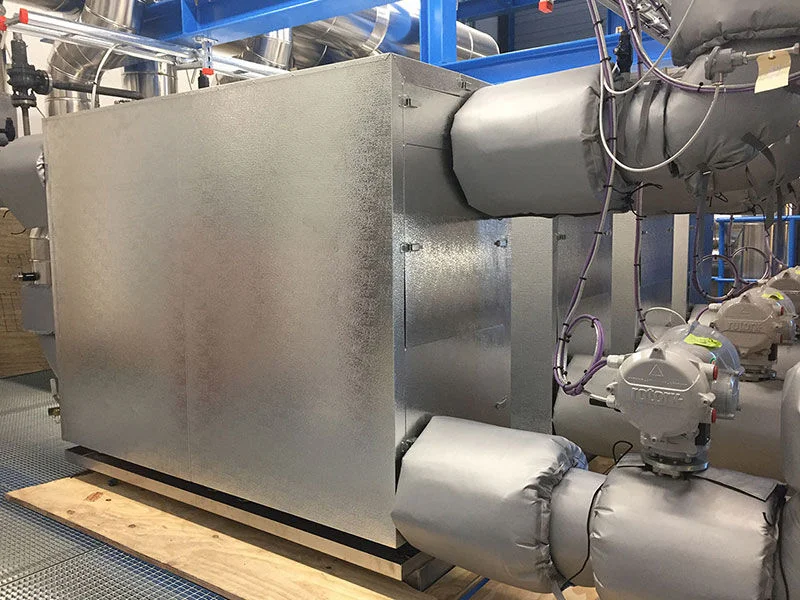
As the world’s leading manufacturer of brazed plate heat exchangers, SWEP was heavily involved in most aspects of the project and ultimately provided eight fully-loaded SWEP B649 brazed plate heat exchangers in a parallel design. In the installation, the BPHEs are arranged in four lines of 2 x SWEP B649 units. Each heat exchanger contains the maximum number of plates.
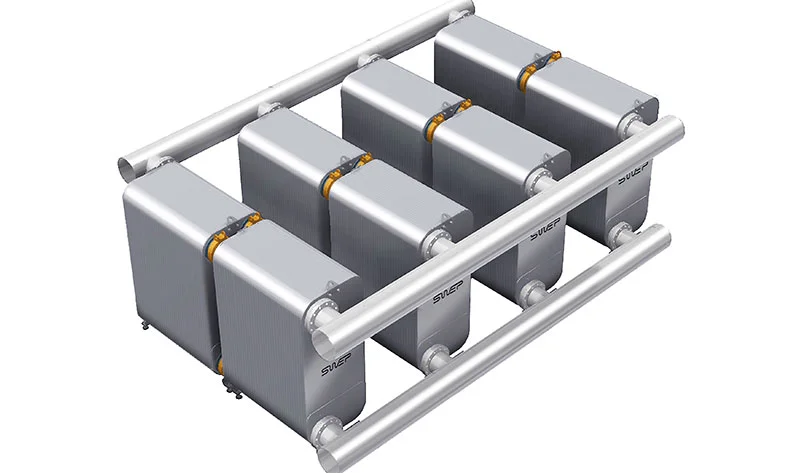
The units generally operate with 1–2 lines; but with all four lines operating, the units are capable of taking a full load of up to 51 MW when needed. The units transfer heat from Vestforbrænding I/S to Lyngby Kraftvärme A/S for distribution, via the storage tank, throughout the Danish Technology Institute (DTU) area. Because the system can also be run in reverse mode, it is possible for Lyngby Kraftvärme to sell surplus energy back to Vestforbrænding I/S. 80% of the energy produced from waste incineration at Vestforbrænding is turned into district heating. The remaining 20% becomes power.
Why choose SWEP?
Ramboll’s goal was to design an efficient, environmentally friendly energy solution. That made SWEP brazed plate heat exchangers a sound choice for the project. As well as being extremely cost-effective, thanks to their high efficiency and small footprint, they also minimize the consumption of raw materials, whose extraction and processing have a high environmental impact.
Winning the contract to provide brazed plate heat exchangers for Vestforbrænding was a major breakthrough for SWEP. The contract was both reward and recognition for SWEP’s careful preparation in defining the correct scope of supply, as well as for handling the detailed risk assessment with care and imagination.
More about Vestforbrænding
Vestforbrænding is Denmark’s largest waste and energy company and is jointly owned by 19 municipalities in Zealand. They receive waste from companies, as well as from one million citizens, and work daily to ensure that the waste is treated in a manner that has the least impact on the climate and environment. The majority of the waste is sent for recycling. The rest is incinerated at their facility in Glostrup and used to produce electricity and district heating, which is primarily distributed via their own district heating network. They employ approximately 500 people across multiple locations.
More related stories
Related case stories
District heating
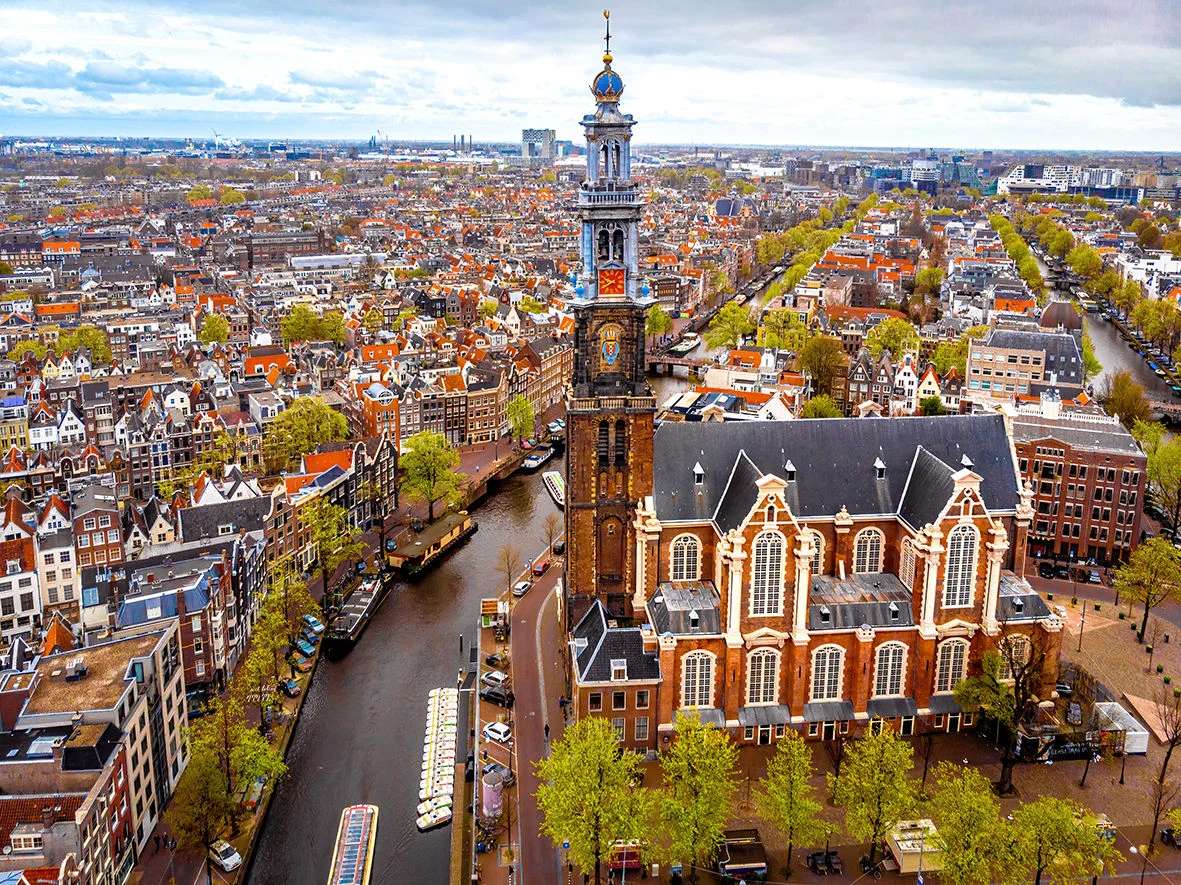
Vattenfall’s Hakfort project showcases the largest capacity heat transfer station utilizing brazed plate heat exchangers. This investment of Vattenfall enables the expansion of the Amsterdam district heating grid. In total, the district heating grid will heat up to 290.000 households in Amsterdam by 2040. An unprecedented capacity of 84MW uses SWEP B649 heat exchangers.
District heating
Tight space requirements paired with a need for a very close cross over temperature between the boiler and water temperatures led to SWEP brazed plate heat exchangers being the ideal heating solution chosen over competing technologies.
Address
SWEP International AB
PO Box 105
261 44 Landskrona
Sweden
Follow Us

Copyright © 2026 SWEP International AB, a Dover company
Follow Us

Copyright © 2026 SWEP International AB,a Dover company