

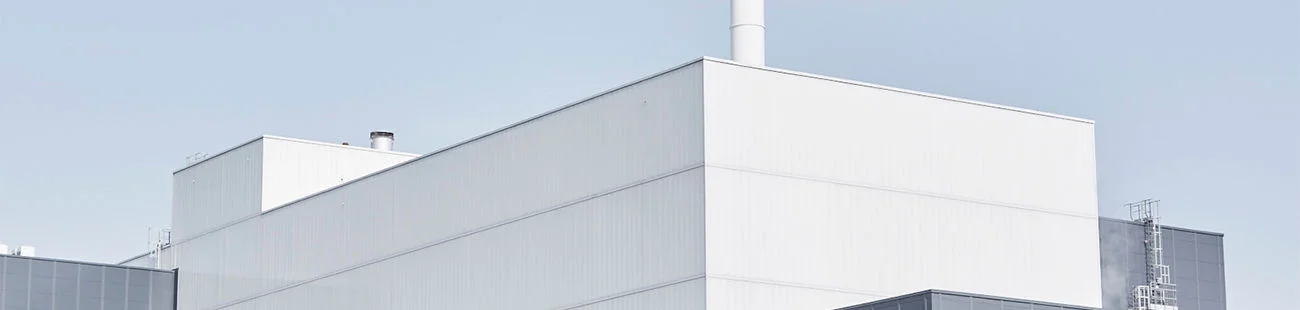
Shawfair Town gets a £30 million low-carbon heating network
The customer: Vattenfall Edinburgh and Midlothian Energy Limited
The challenge: Build a £30 million low-carbon heating network for Shawfair Town, a new development near Edinburgh, fueled with waste heat from Millerhill Recycling and Energy Recovery Centre (RECR), an energy-from-waste plant.
The solution: Millerhill RERC incinerates tons of waste that is unsuitable for recycling. Heat from the incinerator is used to generate hot water, for transfer to Shawfair Town via the district heating network.
The heat exchangers: The substations are built around SWEP B439Hx240 brazed plate heat exchangers. Each substation has two units.
The results: Each SWEP BPHE transfers approximately 1,200 kW of waste heat to warm homes, schools, and retail properties, while reducing CO2 emissions by 2,500 tons per year.
Multiple challenges overcome
By using waste energy, and potentially other renewable energy sources, the new system in Shawfair Town reduces carbon emissions and moves the region toward its sustainable development goals, including strengthening the low-carbon infrastructure. By reducing reliance on fossil fuels and boosting the use of locally-produced energy, the system also boosts energy security, affordability and resilience.
The biggest challenge in the Shawfair Town project was timing. The engineers needed to create a solution that would meet the heating needs of the town from the very start, even while the rest of the five phases were being built. Because each substation was scheduled to come online at a different phase of the project, they needed to compensate for fluctuations in temperature and pressure. The network also needed to be flexible, and able to expand to cover the heating needs of 600 additional homes planned for the surrounding region in the near future.
.jpg)
Thermal storage vessels that each store 100,000L hot water (and space for a future 4 ) to satisfy peak demand for the heat network
The role of SWEP brazed plate heat exchangers
Consulting engineers, Hulley & Kirkwood, designed the substation solution using SWEP B439Hx240 BPHEs. Each substation has two units, one in service and one on stand-by, and each unit transfers approximately 1,200 kW of waste heat. The design was standardized to minimize the number of variants. Currently, four substations are in operation, with an additional six planned.
.png)
A 3D simulation is useful in the design phase to test technical aspects of the substation.
The high operating temperatures in the heat network (65°C flow and 35°C return on the primary side, and 60°C flow and 30°C return on the secondary side), make SWEP heat exchangers suitable for low delta T and a stable return temperature. SWEP BPHEs are also able to handle the system’s high operating pressures of up to 15 bar.
A future-proof solution for multiple scenarios
Consulting engineers Hulley & Kirkwood designed the substation solution which uses SWEP B439Hx240 Brazed Plate Heat Exchangers. Each substation has two units, one in service and one in stand-by, and are designed for approximately up to 1,200 kW each. The design was standardized to minimize the number of variants. Currently, four substations are in operation with a total of ten substations planned to supply the needs of Shawfair Town.
The temperatures in the heat network are 65°C flow and 35°C return on the primary side and 60°C flow and 30°C return on the secondary side. These operating temperatures make the SWEP heat exchangers suitable for the low delta T and stable return temperature as SWEP BPHEs has no moving parts. Also operating pressures of up to 15 bar favor brazed plate heat exchangers instead of more traditional solutions.
.jpg)
The future proof substation solution which uses SWEP B439Hx240 brazed plate heat exchangers.
Why choose SWEP?
Hulley & Kirkwood chose SWEP Brazed Plate Heat Exchangers for the solution due to their small footprint and maintenance free design, as well as the technical support from SWEP’s experts and the SWEP DThermX software tool. Because the project was completed in stages, each substation had to be able to manage five different load and temperature scenarios. The ability to standardize the design using SWEP’s “off-the-shelf” products makes future maintenance and expansion even more efficient.
For consumers, the switch from gas boilers to the heat network system will be effortless. “The change for residents is minimal. They still have a thermostat, a meter and a white box on the wall that produces heat. Their hot water flows from the shower, and their radiators heat up as usual. The only difference is the absence of a gas meter and gas supply, which has been replaced by a hot water supply.” - Paul Steen, Head of Business Development (North) at Vattenfall Heat UK.
.jpg)
Keeping the substation in safe housing.
More about Vattenfall and Midlothian Energy Limited
Vattenfall is a European energy company with approximately 21,000 employees, which has been producing and delivering electricity to industry and private homes for more than a century. The company is dedicated to building a fossil-free future. Midlothian Energy Limited (MEL) is a joint venture between Vattenfall and the Midlothian Council, whose aim is to supply low-carbon heat to new homes in Midlothian, while also advancing a variety of other energy projects. Principal contractor on this project is the FES Group, a prominent facilities management and energy solutions company based in Stirling, Scotland. SWEP’s Advanced heat exchanger technology for the project is and distributed by SWEP’s local dealer, HASL.
More related stories
Related case stories
District heating
Vattenfall’s Hakfort project showcases the largest capacity heat transfer station utilizing brazed plate heat exchangers. This investment of Vattenfall enables the expansion of the Amsterdam district heating grid. In total, the district heating grid will heat up to 290.000 households in Amsterdam by 2040. An unprecedented capacity of 84MW uses SWEP B649 heat exchangers.
District heating
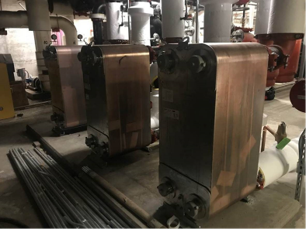
Tight space requirements paired with a need for a very close cross over temperature between the boiler and water temperatures led to SWEP brazed plate heat exchangers being the ideal heating solution chosen over competing technologies.
Address
SWEP International AB
PO Box 105
261 44 Landskrona
Sweden
Follow Us

Copyright © 2026 SWEP International AB, a Dover company
Follow Us

Copyright © 2026 SWEP International AB,a Dover company