


8 years of trouble-free operation, even with critical water
The customer: Oventrop, a leading European manufacturer of sanitary/control fittings and water systems.
The challenge: Reduce corrosion, scaling, and fouling that damage tap water heating systems and cause breakdowns.
The solution: Install SWEP SealixTM BPHEs in all new-build projects and to replace damaged older units.
The heat exchangers: Tens of thousands of SWEP 8LAS, SWEP B15 and SWEP B28 BPHEs, with a wide range of plate packages, all protected by SWEP Sealix.
The results: Significantly reduced maintenance, repair, and replacement costs in thousands of tap water stations across Germany. Improved performance and reduced corrosion and scaling, even in hard-water areas.
Scaling, fouling and corrosion are the primary causes of breakdown in tap water heating systems. Because drinking water is an ‘open system,’ whose composition varies depending on where and how it is extracted, natural water frequently contains free carbonic acid, salts, chlorides and/or minerals. Many of these compounds are reactive with metal, and may cause corrosion or fouling inside heat exchangers, increasing the cost of maintenance, repair and replacement. In areas with hard water, scaling can impair the performance of the heat exchanger and also increase the risk of corrosion. Oventrop, one of Europe’s leading manufacturers of sanitary/control fittings and water systems, experienced these challenges every day – until they used heat exchangers with patented SWEP Sealix technology.
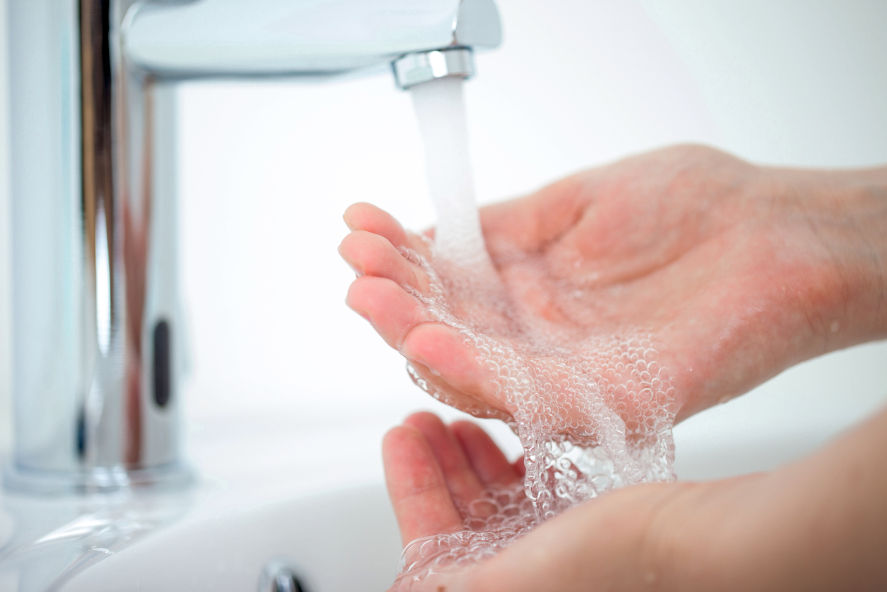
Oventrop installed the first SWEP Sealix BPHE in 2016, as a replacement for a corroded heat exchanger in a building project outside of Leipzig. According to Dieter Stich, sales engineer at Oventrop: “Two years after the building was complete, the first heat exchanger was defective. At first, we didn't think much of it. But then our customer reported more cases of defective heat exchangers from the same building. We found out that the stainless-steel plates were completely corroded."
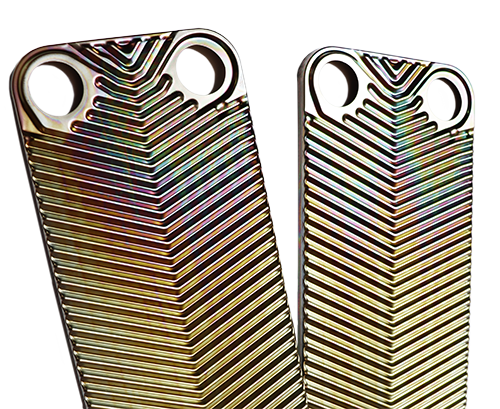
Analysis showed that the water in the building contained 155 mg of chloride per liter and that chloride was concentrated on areas of the stainless-steel plate where scaling deposits had developed. At first, Oventrop replaced the damaged heat exchangers with higher-quality variants and trialed heat exchangers from other suppliers. But even the use of nickel or stainless-steel brazed joints didn’t help.
The role of SWEP brazed plate heat exchanger
Until 2017, the company replaced corroded BPHEs one-by-one, testing a wide range of different water systems and more than 100 different heat exchangers. Finally, the decision was made to replace all of the remaining units with SWEP Sealix – and not a single replacement has been necessary since.
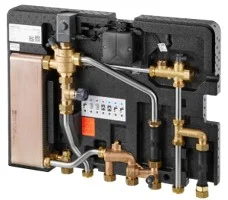
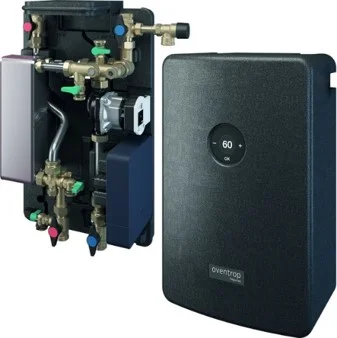
Oventrop made an official market launch with SWEP Sealix in the autumn of 2018 and has installed tens of thousands of SWEP Sealix BPHEs since 2020. These include: 8LAS models for freshwater stations, B15 units as spares for older stations, and B28 models for large freshwater stations. The number of plates in their plate packages varies, but they are all protected by SWEP Sealix technology.
Why choose SWEP?
SWEP Sealix, a revolutionary SiO₂-based thin-film which is applied as a protective layer on all inner surfaces of the BPHE, offers a proven track record from many industries. It consistently delivers improved resistance to scaling, fouling and corrosion, while also maintaining exceptional thermal and hydraulic performance.
“For locations with critical water conditions, we generally recommend to our customers to use our variants with Sealix inside,” says Dieter Stich. “But we also have customers who simply want it as an extra security. They know SiO₂ from other industries, such as food and beverage, as a very hard material, which is resistant to chemical attack and weathering. They have confidence in this technology.”
Starting in 2016, Oventrop has made all new “Regudis” home tap water stations and “Regumaq” freshwater stations available with a SWEP Sealix option. Several thousand stations, featuring SWEP Sealix, are currently in operation throughout Germany.
More about Oventrop
Oventrop is a leading manufacturer of sanitary/control fittings and water systems, with expertise in heating, cooling, and clean potable water. It is a family business with more than 170 years of history. With headquarters in the Sauerland region of Germany, they have approximately 1,000 employees at their headquarters in Olsberg and in neighbouring Brilon. With production facilities in Poland and China, eight subsidiaries, and numerous agencies, they are present in more than 80 countries.
More related stories
Related case stories
Industrial heating and cooling
SWEP’s robust All-Stainless brazed plate heat exchangers helped provide optimized cooling for sheet metal laser cutting equipment where deionized water is the main coolant. The copper-free chiller system was imperative to maintain the integrity of non-conductive coolants.
Industrial heating and cooling
Green Resource Engineering (GRE) wanted to create two new process cooling systems that can operate at higher temperatures and a smaller version that could also operate in reverse as a heat pump.
Address
SWEP International AB
PO Box 105
261 44 Landskrona
Sweden
Follow Us

Copyright © 2026 SWEP International AB, a Dover company
Follow Us

Copyright © 2026 SWEP International AB,a Dover company