

SWEP supplies expertise and innovation to EU’s CHESTER project
As the European energy sector accelerates its efforts to decarbonize operations and improve efficiency, high-temperature heat pumps (HTHPs) have emerged as a promising technology both for heat recovery and for integrating renewable energy into the grid. In the coming years, HTHPs are expected to contribute significantly to the EU’s ultimate goal of building net-zero-emissions systems Europe-wide.
However, challenges remain. All power grids require a continuous, real-time balance between generation and consumption. Targeted penetration of renewable energy sources (RES) into the existing grid is dependent on the ability to store, manage, utilize, and dispatch energy where and when it is needed. The CHESTER Project was created to find solutions to this challenge.
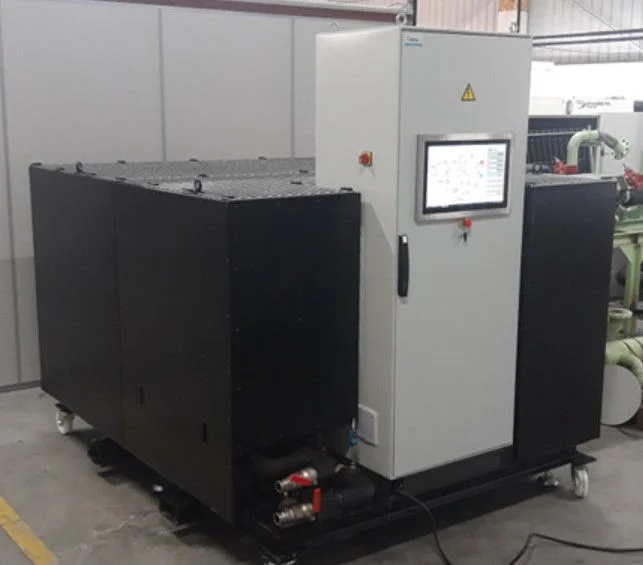
Meet CHESTER
An ambitious European initiative, the CHESTER project — short for Compressed Heat Energy Storage for Energy from Renewable sources — is focused on developing a highly flexible energy-management system capable of integrating power from a range of renewable sources across the electricity and heating sectors.
At the core of the project is the innovative CHEST system: a power-to-heat-to-power solution designed to store excess electricity and convert it into usable heat and power on demand. The CHEST system combines:
- A high-temperature heat pump (HTHP)
- High-temperature thermal energy storage (HT-TES)
- An Organic Rankine Cycle (ORC) unit
- Advanced energy management systems
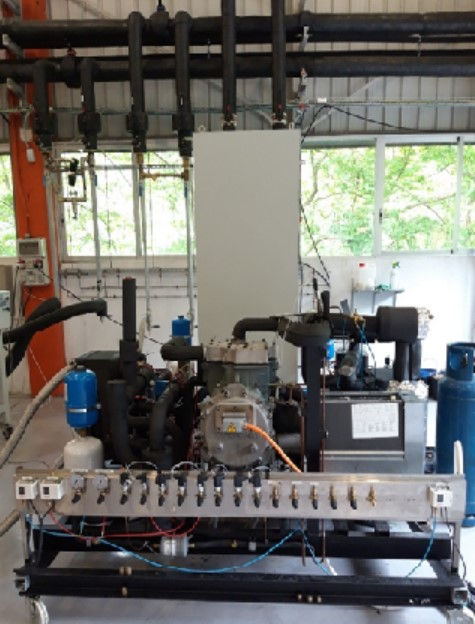
The system uses excess electricity to power the HTHP, which upgrades low-temperature heat (waste heat) to high-temperature thermal energy. That heat is then stored in a latent thermal energy storage system using phase change materials (PCM). When the demand for electricity increases, the stored heat is converted back into electricity using the ORC system.
Several unique features differentiate the CHEST system from other energy-storage solutions, including:
- Site-independence (vs. pumped hydroelectric) and cyclical stability (vs. batteries)
- Ability to transform low-temperature heat into electricity and back into heat
- Ability to store and deliver heat and electricity independently, on demand
- Possibility to integrate with both district heating networks and industrial thermal loads
- Improved balancing for electrical grids
The importance of high-temperature heat pumps
Central to the development of the CHEST system is a first-of-its-kind, 10 kWe, high-temperature heat pump prototype that utilizes low-GWP R1233zd(E) as a refrigerant. Designing a high-efficiency heat pump capable of delivering industrial-grade temperatures presented significant engineering challenges. The system needed to deliver condensing temperatures up to 150°C, generating steam for industrial applications and maintaining a high coefficient of performance (COP) despite large temperature lifts.
The results were highly promising. The heat pump prototype used heat at temperatures between 70°C and 95°, delivering outlet (condensing) temperatures up to 146°C, resulting in COP values between 3 and 7, depending on operating conditions. Total heating capacity ranged from 15.5 kW to 68.2 kW, with approximately 50% of the total heat delivered through the sub cooler section.
Collaboration and expertise hand in hand
SWEP joined the project when researchers from TECNALIA approached the brazed-plate heat exchanger manufacturer seeking units capable of operating as evaporators, condensers, and sub coolers within the HTHP prototype. SWEP BPHEs were perfect for the job, thanks to their compact footprint, stellar safety profile, proven performance, strong two-phase heat transfer capabilities, and the ability to utilize R1233zd(E).
The collaboration quickly expanded beyond simply delivering BPHEs. “Our participation was as an active contributor, not only a component supplier,” explains Regional Sales Manager Giancarlo Soler Zabala. “The experience gained through earlier industrial heat pump projects allowed us to contribute expertise in refrigerants, steam production, and system integration. This project further strengthened our competence in both industrial and domestic heat pump applications.”
This collaborative approach reflects a broader industry trend in which thermal component manufacturers increasingly serve as development partners helping optimize entire energy systems.
According to Miguel Ramirez, a specialist in industrial heat pumps (formerly of TECNALIA, now at TNO) the SWEP heat exchangers performed reliably throughout testing: “The HTHP worked well as a stand-alone setup. All SWEP BPHEs worked well, with only minor issues identified in the sub cooler due to low flow rate and high delta-T conditions, which were solved by adjusting the water-side pressure.”
An Innovative Heat Pump Configuration
One of the most innovative aspects of the CHESTER HTHP design was its split-heat delivery configuration. Instead of delivering all thermal energy through a single condenser, the system divided heat transfer into latent heat delivered in the condenser and sensible heat delivered in a dedicated sub cooler. This configuration enabled improved temperature matching between the refrigerant and the secondary fluid, minimizing pinch points and reducing heat loss during transfer. The result was an efficient system architecture capable of operating under demanding industrial conditions.
Supporting Europe’s Decarbonization
Projects such as CHESTER highlight the growing importance of high-temperature heat pumps in the EU decarbonization strategy. Industrial heating remains one of the most difficult sectors to electrify, particularly in processes requiring steam or very high temperatures. HTHPs capable of efficiently upgrading waste heat into usable process heat offer a powerful pathway toward reducing carbon emissions while improving overall energy efficiency.
For SWEP, participation in the CHESTER project reinforced the company’s position as a technical expert in advanced thermal systems and energy-efficient heat transfer solutions. As demand for industrial heat pumps continues to grow, technologies such as SWEP’s BPHE portfolio — including legacy products like the 500T and 649 series — are increasingly well-positioned to support next-generation sustainable heating applications.
The CHESTER project ultimately demonstrated that innovative system design, combined with close collaboration between research organizations and industrial technology partners, can accelerate the transition toward smarter, cleaner, and more flexible energy systems.
Source:
- https://cordis.europa.eu/project/id/764042/reporting
- https://www.tecnalia.com/en
- Science Direct – Applied Thermal Engineering Journal
- https://www.sciencedirect.com/science/article/pii/S135943112400629X
- Cordis Europe: https://cordis.europa.eu/project/id/764042/reporting
- The Project » CHESTER Project
- TECNALIA » CHESTER Project
Address
SWEP International AB
PO Box 105
261 44 Landskrona
Sweden
Follow Us

Copyright © 2026 SWEP International AB, a Dover company
Follow Us

Copyright © 2026 SWEP International AB,a Dover company